
Will Bikes Rust in a Bike Shed? A Factory's Guide for Wholesale Buyers
Nov 18, 2026
By [Taizhou Sunshine Garden Products Co., Ltd.] - Engineering & OEM Team
As a manufacturer supplying bike sheds, bike storage solutions, and bicycles to wholesalers and distributors worldwide, we hear this question constantly from buyers and their end customers: "Will bikes rust if I store them in a bike shed?"
The short answer: a bike shed significantly reduces rust risk - but it does not eliminate it. For wholesale buyers, understanding this distinction matters, because it shapes product positioning, customer expectations, and after-sales support. Here is our factory-side breakdown.
The Core Principle: Shelter Is Not Sealing
Rust is an electrochemical reaction between metal, oxygen, and moisture. A bike shed blocks direct rain and UV exposure - both genuinely helpful. But it cannot remove humidity from the air, prevent condensation from day-night temperature swings, or stop ground moisture from rising. A shed is a rust-reduction measure, not a rust-proof guarantee. Wholesale buyers should position it accordingly.
Four Variables That Decide Whether a Bike Rusts
1. Shed design and ventilation
Fully enclosed sheds with poor airflow can trap moisture and produce more condensation than open air. Open or semi-open designs ventilate better and dry faster. Poor drainage - standing water on the floor - keeps tires and lower frame tubes damp indefinitely. When sourcing sheds, ventilation and drainage design are the first things to audit.
2. Bicycle materials and coating processes
Carbon fiber frames don't rust, but chains, cassettes, fasteners, and cable housings still do. Aluminum frames don't rust in the conventional sense, but can corrode, and galvanic corrosion occurs where aluminum contacts steel. For steel frames, rust resistance depends on coating: standard paint < electrophoretic coating < galvanized + multi-layer coating. Factories should publish salt-spray test ratings so buyers know the corrosion class they're purchasing.
3. Environment
Coastal salt-spray zones, high-humidity regions, and industrial pollution areas accelerate corrosion even under shelter. A shed in a dry inland market performs very differently from one on a coastline. Wholesale buyers should match product specifications to regional climate.
4. User habits
Putting a wet bike straight into the shed, skipping chain lubrication, or leaving a bike unused for months all allow corrosion to continue indoors. Condensation and dust are enough to rust a neglected chain.
What We Do as a Factory
- Clear product labeling - we state that products are designed for sheltered storage but are not maintenance-free, avoiding end-customer misunderstanding.
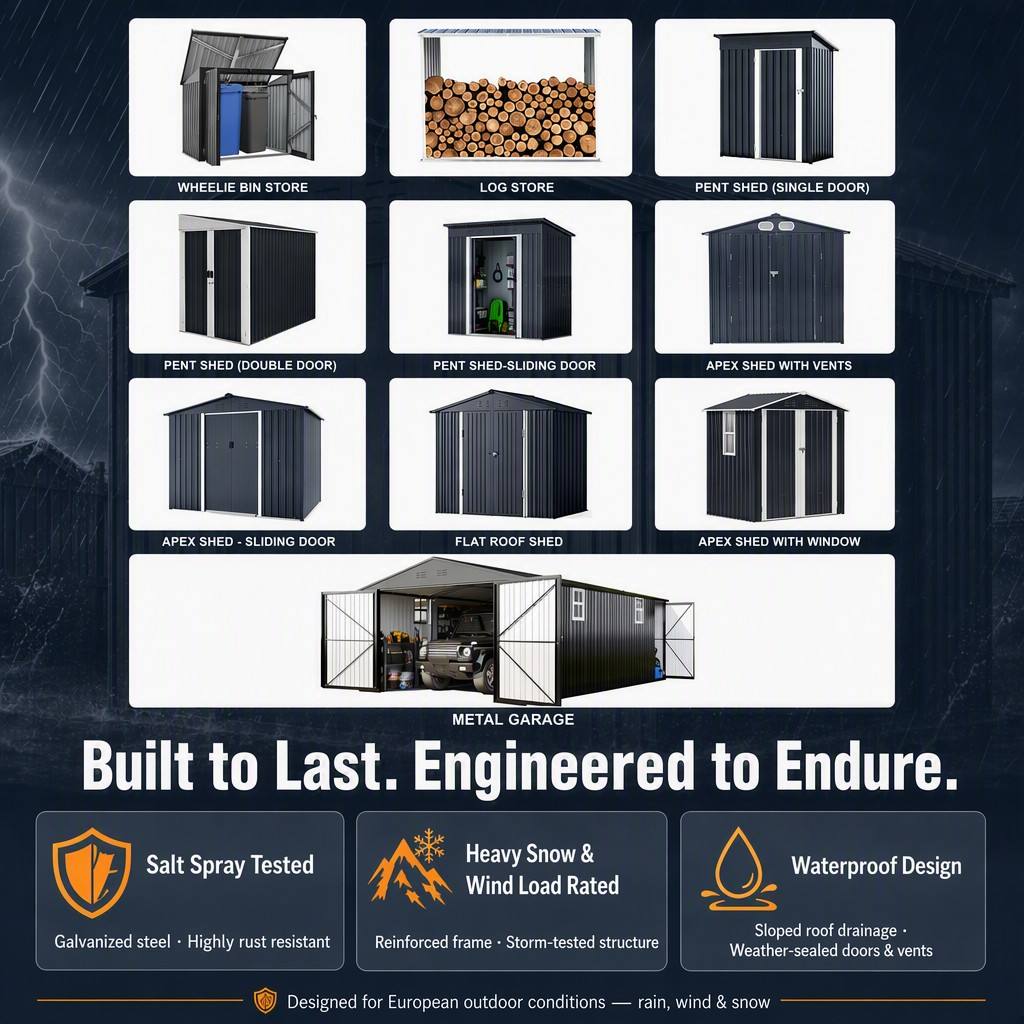
- Corrosion protection on key components - galvanized or stainless fasteners, anti-rust coatings on chains and quick-releases, and published salt-spray test results for frames.
- Drainage-friendly structure - frame and shed designs that avoid water traps and support airflow.
- Maintenance guidance included - wipe-down after rain, periodic chain lubrication, and cable-housing checks, packaged as user education.
- Consistent after-sales messaging - we stand behind material and process defects, but do not promise "no rust ever" under shed storage.
The Bottom Line for Wholesale Buyers
A bike shed substantially slows rust - it does not guarantee a rust-free bike. Whether a bike rusts depends on four factors combined: shed ventilation and drainage, the bike's anti-corrosion process, local climate, and user maintenance. Position sheds as risk-reduction products, source bikes with documented coating ratings, and educate end customers - that's how wholesale buyers protect margins and reduce after-sales disputes.
[Taizhou Sunshine Garden Products Co., Ltd.] supplies bike sheds, storage solutions, and OEM bicycles to distributors worldwide. Contact us for salt-spray test reports, coating specifications, and wholesale catalogs.