

SUNSHINE GARDEN is a manufacturer from China with 14 years OEM & ODM experience. We are dedicated to providing one-stop products and solutions for Home Garden.
Our main products can be divided into two series, Home Gardening Series like garden greenhouses from Mini-walk in to Large Tunnel Greenhouse, Chicken Coop,Outdoor Dog Kennel,Grow bags,Grow Tents, Grow Tent Complete Kits, another series is Garden Storage Series like Metal Storage Shed, Metal Car Garage Shed,Heavy Duty Canvas Storage Canopies,Firewood Storage Racks.
01
One-stop Solution
With rich experiences in manufacturing and strong power in the industry supply chaine, we helped a lot of gardening clients creating their own brand and we can also provide one-stop solutions for greenhouse grow.
02
Custom Service
We support product customization services, you can talk to our customer service center about your sourcing requirements, whether selecting a current product from our catalog or seeking assistance for your application.
03
Quality Control
Our factories are supervised carefully, there are strict quality assurance test and lab test and multiple inspections.
04
Global Shipping
Our products are exported to more than 30 countries including North America, Europe, South America and East Asia market.
What is Garden Greenhouse?
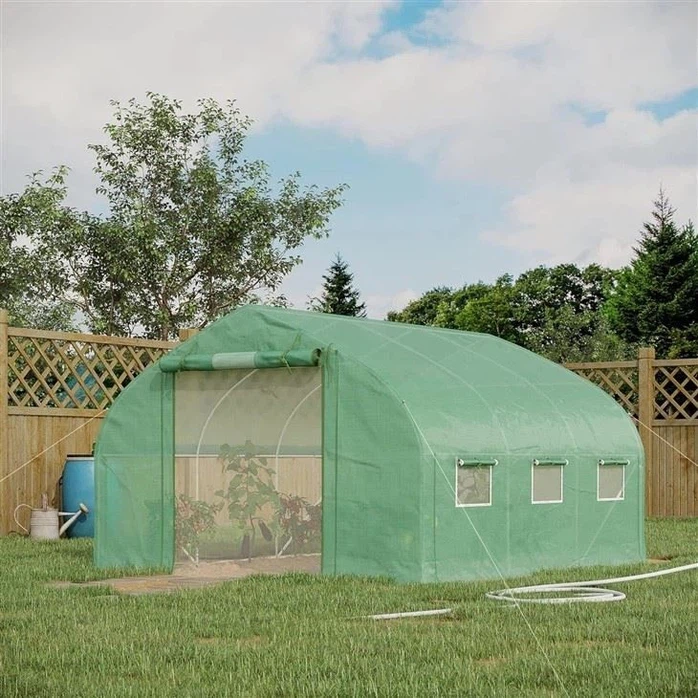
A garden greenhouse is a special structure that is designed to regulate the temperature and humidity of the environment inside. There are different types of garden greenhouses, but they all have large areas covered with transparent materials that capture sunlight and heat. The most common materials used in modern greenhouses for walls and roofs are rigid plastic made of polycarbonate, plastic film made of polyethylene, or glass panes. When the inside of a greenhouse is exposed to sunlight, the temperature increases, providing a sheltered environment for plants to grow even in cold weather.
-
![Polytunnel Garden Greenhouse]() Add to Inquiry
Add to Inquiry -
![Walk-In Portable Mini Greenhouse]()
Walk-In Portable Mini Greenhouse
Add to Inquiry -
![Small Tomato Garden House Outdoor PVC Greenhouse]()
Small Tomato Garden House Outdoor PVC Greenhouse
Add to Inquiry -
![Mini Greenhouse With Roll Up Doors & Portable Zipper Bag]()
Mini Greenhouse With Roll Up Doors & Portable Zipper Bag
Add to Inquiry -
![Mini Greenhouse With 2 Large Windows And Ground Nails]()
Mini Greenhouse With 2 Large Windows And Ground Nails
Add to Inquiry -
![Portable Walk-in Greenhouse With 4 Tier Shelves]()
Portable Walk-in Greenhouse With 4 Tier Shelves
Add to Inquiry -
![Outdoor Lean To Garden House, PE Cover And 3-Tier Shelves]()
Outdoor Lean To Garden House, PE Cover And 3-Tier Shelves
Add to Inquiry -
![Lean To Outdoor Greenhouse]() Add to Inquiry
Add to Inquiry -
![Portable Gardening Plant Green House]()
Portable Gardening Plant Green House
Add to Inquiry -
![Outdoor PE Greenhouse Steel Frame Plant Cover]()
Outdoor PE Greenhouse Steel Frame Plant Cover
Add to Inquiry -
![4 Tier Mini Greenhouse]() Add to Inquiry
Add to Inquiry -
![Mini Greenhouse 5 Tier Outdoor House PVC Cover]()
Mini Greenhouse 5 Tier Outdoor House PVC Cover
Add to Inquiry




Benefits Of Garden Greenhouse
EXTENDS YOUR GROWING SEASON
Garden greenhouses provide a more controllable environment by trapping the heat from the sun creating a warm, more stable environment allowing your plants, flowers and trees to prosper for longer than a typical outdoor growing season.
FORCED VENTILATION
When your garden greenhouse reaches a certain temperature, the fan activates, helping to push warm air out through the windows and drawing cool air in. Cycling fresh air into the greenhouse helps reduce humidity and creates ideal growing conditions.
EXTERIOR & INTERIOR HOSE HOOKUP
With a greenhouse that includes both an exterior and interior hose hookup, you can easily hook your hose up to the outside to water your plants and flowers on the inside. No more dragging the hose around the yard, and no having to leave it in the greenhouse.
THERMAL EFFICIENCY
Commercial-grade polycarbonate panels can help to retain up to 30 percent more heat than most greenhouses, allowing you to start your gardening season earlier and finish later. Depending on your climate, it’s possible that a greenhouse can even help keep your garden alive year-round!
PLENTY OF SPACE
The right greenhouse for you should offer plenty of floor space for planting should you decide to grow larger plants, but it should also have plenty of shelving for smaller pots, tools, and other items.
BUILT TO LAST
If you’re worried that your greenhouse will be a temporary solution, worry not. Greenhouses made of strong, durable materials such as cedar are rot-resistant and can withstand extremely high winds. The roofs can also hold a heavy snow load, so you don’t have to worry about winter storms causing an issue.

Garden greenhouses serve as a shield between nature and what you are growing, and thus allow growing seasons to be extended as well as possibly improved. They provide shelter from excess cold or heat as well as pests.
The idea behind a certain type of greenhouse is to create a place to keep heat in. The structure impedes the flow of thermal energy out, and the sunlight that passes through the transparent “walls” of a greenhouse heats up the ground in the greenhouse which radiates warmth and heats the air. Or, if too much heat is a problem, a greenhouse can help you create or regulate a more temperate environment for plants by adding a cooling mechanism.
Types of Garden Greenhouse
Lean-To
These structures are designed to rest against an existing wall, potentially allowing for more heat absorption through the surface. Lean-to greenhouses also often offer the convenience of water and electricity when connected to a house wall.
Growing Racks
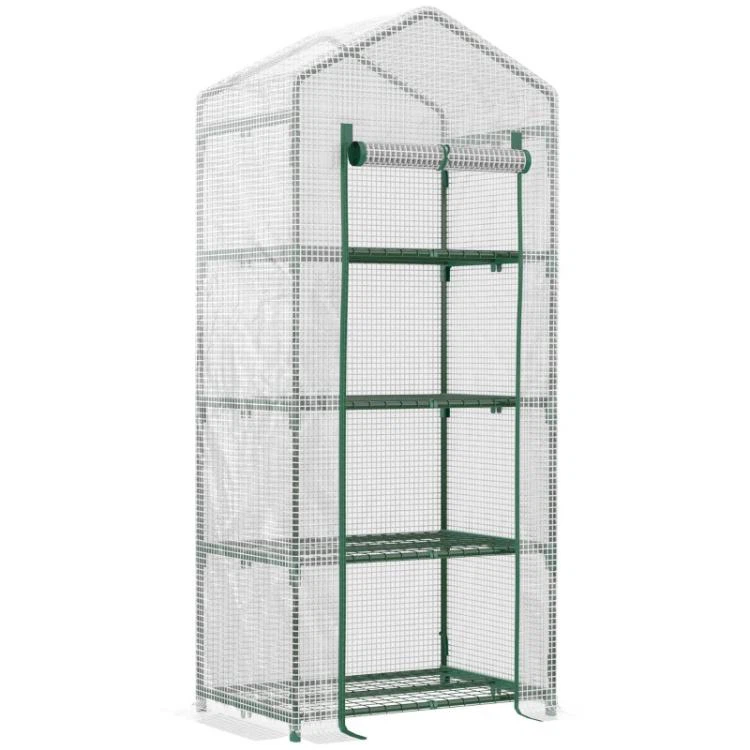
These vertical racks are used to grow seedlings and smaller plants within a greenhouse environment but without the large footprint. Growing racks usually have a plastic or vinyl exterior with a door that can be rolled up to give you access to your plants.
Mini
Perfect for beginner growers, mini-greenhouses are a space-saving option suitable for growing small plants. They are often placed directly over flowerbeds, removing the need for installation.
Cold Frame
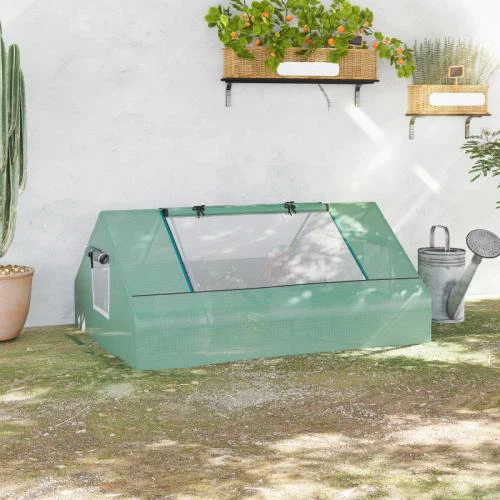
Cold frame greenhouses rely on natural heat from the sun to create a microclimate for your plants that is warmer than outside. They are useful for extending your growing seasons especially in the transitional weeks from one season to the next.
Portable
Portable greenhouses can range from mini compact greenhouses that can easily fit on a balcony to easy-to-assemble and disassemble garden greenhouses that provide enough space to grow as you want.
Raised bed
Raised bed greenhouses are perfect if your space is limited or if you don’t need a lot of growing space. These small and portable greenhouses are a great way to start your garden.
How Do Garden Greenhouses Work?
In short, a garden greenhouse turns light energy into heat energy which the plants then use to grow. This takes place in a number of steps:
Step 1: Greenhouse walls and roofs are usually made of large expanses of a translucent material such as glass or plastic. This is to allow sunlight to more easily enter and expose the plants to natural light during the day.
Step 2: The sunlight is then absorbed by the ground, the plants, and anything else inside the garden greenhouse, and converted into infrared energy or heat in the process.
Step 3: Once these items begin releasing their heat energy, it rises to the top but cannot easily escape from the interior of the greenhouse itself thanks to its insulated design. This trapped heat then begins to raise the internal temperature of the garden greenhouse.
Step 4: It is important to note that the insulated nature of the greenhouse combined with this heating process can potentially cause the interior to become hotter than the exterior. For this reason, ventilation is an extremely important component of a successful greenhouse, whether this is through opening a window or door or using a fan. Ventilation helps to regulate the temperature and humidity, and ensures air movement within your greenhouse. This fresh air supply facilitates photosynthesis, plant respiration, and can even potentially allow pollinators access into your greenhouse garden.
Step 5: Thanks to the light and heat produced by the greenhouse, the plants now have the right conditions for photosynthesis, the process plants use to grow.
Step 6: Greenhouses are responsible for the heat and light, but it is up to you to manage the air flow, water, and fertilization of your plants. These high temperatures often result in faster evaporation and plants quickly using nutrients, which means you will need to water diligently and fertilize regularly.
Step 7: Depending on what your intentions are, a home greenhouse with proper covers, propagation mats, and other greenhouse accessories will allow you to germinate seeds, extend growing seasons, propagate plants, or start growing earlier.
Material of Garden Greenhouse

Glass
Glass panels have been the material of choice for permanent greenhouse structures. They allow the highest percentage of light in, and they look great, as well. Glass greenhouses need ventilation during the hot days as your plants can burn.
Polycarbonate
Polycarbonate greenhouses are made from thick plastic, making them cheaper and more versatile than most glass greenhouses. This material is superior to glass in some ways.
Polyethylene
Polyethylene film is inexpensive and lightweight, making it easy to use. Oxygen and carbon dioxide can pass through this greenhouse film because it is porous, allowing plants to breathe in a tightly sealed greenhouse.
Fiberglass
Fiberglass Reinforced Plastic (FRP) is another good option for your greenhouse. FRP scatters sunlight, providing good diffusion and light transmission throughout your greenhouse, and can last up to 10 years. The panels of fiberglass have an R-value of 0.89, which is slightly better than glass.
PVC Fabric
In terms of durability, Polyvinyl Chloride (PVC) fabric is the best choice. Some PVC fabrics can withstand heavy snow loads and offer increased insulation, making them good for growers in colder climates.
Acrylic
Acrylic, also known as plexiglass, is a lightweight and shatter-resistant alternative to glass. It offers excellent light transmission, UV resistance, and weatherability. Acrylic is suitable for greenhouses requiring high light transmission and where impact resistance is desired.

What To Consider When Choosing Garden Greenhouse Materials
When choosing garden greenhouse materials, you should take the following considerations into account:
Climate: The amount of sunlight you get per day as well as the maximum and minimum temperatures when the greenhouse is in use determine the insulation value and the transparency of the covering material as well as the amount of ventilation you need.
Weather: Not quite the same thing as climate, weather includes transient events such as high winds, snowstorms and hailstorms. A greenhouse in a location where these occur frequently needs a more durable covering.
What you're growing: If you're growing tropical plants in a cold environment, you’ll need a thicker covering with more insulating value than if your main purpose for building the greenhouse is to start seeds early in the growing season.
Cost: Some of the best covering materials can be very expensive. If you’re building a large greenhouse, you may have to economize by choosing a covering that’s almost as good as the best, but not quite.
DIY ability: When building your own greenhouse, it’s natural to look for frame and covering materials that you can cut and assemble yourself without the need for special equipment.
FAQ
Q: What is the purpose of a garden greenhouse?
Q: What is the difference between garden and greenhouse?
Q: What plants grow best in a greenhouse?
Q: Is it better to grow vegetables in a greenhouse or outside?
Q: What is the best material to use for a greenhouse?
Q: What is best greenhouse covering?
Q: What are most modern greenhouses made of?
Q: Should a greenhouse be in full sun?
Q: What are the two most commonly used greenhouse coverings?
Q: Should a greenhouse be glass or plastic?
Q: Where should you put a greenhouse in your garden?
Q: What temperature is too hot for a greenhouse?
Q: Does a greenhouse need to be in full sun?
Q: How often should I water my greenhouse plants?
Q: Can you leave plants in a greenhouse all winter?
Q: How cold is too cold for plants in a greenhouse?
Q: Which is better for a greenhouse, PVC or polycarbonate?
Q: What plastic sheeting is best for greenhouse?
Q: What overnight temp is too cold for plants?
Q: Is 40 degrees too cold for tomato plants?
Sunshine Garden has been engaged in offering home garden greenhouse wholesale service for over 10 years, and now is known as one of the professional home garden greenhouse manufacturers and suppliers in China. Please rest assured to get the quality garden grow products made in China from our factory.
