

SUNSHINE GARDEN is a manufacturer from China with 12 years OEM & ODM experience. We are dedicated to providing one-stop products and solutions for Home Garden and Commercial Planting. Our main products can be divided into two series, including Home Gardening Series like garden greenhouses, grow tent complete kits, fabric grow bags & beds, garden compost supplies, etc., another series is Commercial Planting Series like grow racks & rolling benches, led grow lights, greenhouse structure and the whole supporting facility system.
01
One-stop Solution
With rich experiences in manufacturing and strong power in the industry supply chaine, we helped a lot of gardening clients creating their own brand and we can also provide one-stop solutions for greenhouse grow.
02
Custom Service
We support product customization services, you can talk to our customer service center about your sourcing requirements, whether selecting a current product from our catalog or seeking assistance for your application.
03
Quality Control
Our factories are supervised carefully, there are strict quality assurance test and lab test and multiple inspections.
04
Global Shipping
Our products are exported to more than 20 countries including America, Canada, UK, Germany, France and Japan, with a good reputation in the market.
What is Grow Light?
A grow light is an electric light that can help plants grow. Grow lights either attempt to provide a light spectrum similar to that of the sun, or to provide a spectrum that is more tailored to the needs of the plants being cultivated. Outdoor conditions are mimicked with varying colour temperatures and spectral outputs from the grow light, as well as varying the intensity of the lamps. Depending on the type of plant being cultivated, the stage of cultivation, and the photoperiod required by the plants, specific ranges of spectrum, luminous efficacy and color temperature are desirable for use with specific plants and time periods.
-
![10 Bar Folding Strip LED Grow Light]()
10 Bar Folding Strip LED Grow Light
Add to Inquiry -
![T5 Series Grow Light]() Add to Inquiry
Add to Inquiry -
![150W 240W 400W Quantum Board Grow Lights]()
150W 240W 400W Quantum Board Grow Lights
Add to Inquiry -
![Full Spectrum LED Grow Light]() Add to Inquiry
Add to Inquiry -
![Full Spectrum UFO LED Grow Light]()
Full Spectrum UFO LED Grow Light
Add to Inquiry -
![150W Full Spectrum Indoor Quantum LED Grow Light]()
150W Full Spectrum Indoor Quantum LED Grow Light
Add to Inquiry -
![HPS Reflector Combo Electronic Ballast]()
HPS Reflector Combo Electronic Ballast
Add to Inquiry


Advantages of LED Grow Lights
Economic electricity consumption
LED grow lights utilize up 50% of the energy that HPS systems use and some experts anticipate even a higher LEDs efficiency in the near future.
Longer lifespan
LEDs have a longer life span in comparison to the HPS lights; for the comparison’s sake, the HPS lamps can last for 1 year while the LEDs might last even up to 8 years (which translates into 50 000 hours of use).
Smaller spaces convenience
As the LED grow lamps can be set closer to the plants, the growing space does not need to be extremely high or wide.
Fire safety
As LEDs do not become very warm in comparison to the conventional HPS lamps they are safer to use.
Energy efficiency
With LED grow lights it is possible to optimize the spectrum by concentrating energy on wavelengths (colors) that are most beneficial for each application and plant. In addition, reduced heat production allows putting LED fixtures closer to plants ensuring less light is lost elsewhere.
Dimming
While the majority of HPS lamps use the full light intensity, LED grow lights can dim even with a remote control or via an app and therefore are easier to handle, apart from consuming less power.
Better crops
Various trials have shown that LED grow lights produce better crops in terms of plants getting bigger and growing faster, compared to the HPS lights. Additionaly, LEDs can be made with a spectrum aimed at a specific goal such as anthocyanin accumulation, flowering inhibition, enhanced rooting etc.
More environment safety
Due to the fact that less heat is emitted and that UV light can be added in LED lamps, there is less chance for bacteria and mold formation which subsequently means less pesticides and less environment pollution.

The light spectrum ranges through red, orange, yellow, green, blue and violet. The colors at the far ends are most useful to plants but all colors are absorbed to some extent. Different colors serve different purposes which I will outline below.
Blue light (and for the most part violet) is extremely important as it is how our plants get chlorophyll and therefore grow and strengthen their foliage.
Red light is needed for flowering varieties. You must be cautious when using this as too much red light can kill your plant which is why a lot of grow lights offer a mix of both red and blue so your plants are getting all their needs met.
Green and yellow light is said to have minor benefits when it comes to germinating seeds but otherwise is not essential to your plant.
Types of Grow Light
LED Grow Light
It has the characteristics of adjustable spectrum, which can adjust the light intensity and light ratio according to the different growth stages of plants. LED lights also have the advantages of high energy efficiency and low heat generation.
High Pressure Sodium Lamps
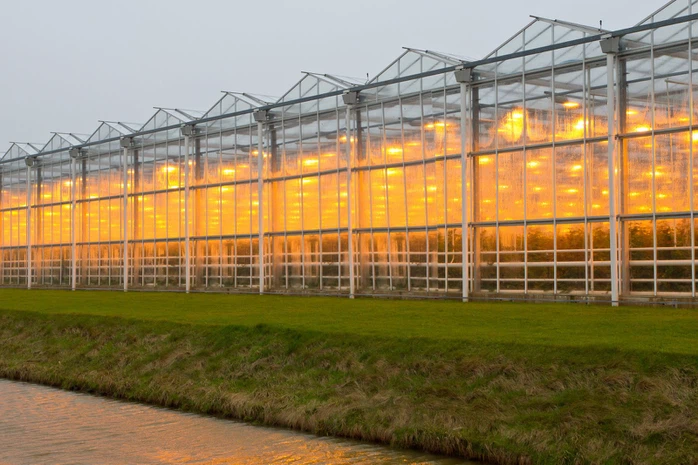
Widely used in commercial greenhouses, it provides strong red and far-red light, which is suitable for the flowering and fruiting stages of plants. High pressure sodium lamps have less blue light, which is not conducive to the leaf growth of plants.
Fluorescent Lamps
Economical and affordable, suitable for beginners and small-area planting. Fluorescent lamps have a narrow spectrum range and may not be suitable for the needs of certain specific plants.
How to Choose Grow Light
When choosing a grow light for your plants, there are a few factors to consider to ensure that your plants receive the right amount and type of light for optimal growth. Here are some tips on how to choose the right grow light:
Light intensity: Different plants have different light intensity requirements. Make sure to choose a grow light that can provide the right amount of light for the specific plants you are growing. You can measure light intensity in terms of lumens or lux.
Light spectrum: Plants require different light spectrums for different stages of growth. Blue light is ideal for vegetative growth, while red light is better for flowering and fruiting. Look for a full-spectrum grow light that provides a good balance of blue, red, and other essential wavelengths.
Energy efficiency: Choose a grow light that is energy-efficient to save on electricity costs. LED grow lights are a popular choice as they consume less energy and produce less heat compared to traditional HID lights.
Size of the growing area: Consider the size of the area you need to cover with the grow light. Make sure to choose a light that can adequately cover the entire growing area to ensure uniform light distribution.
Durability and lifespan: Look for a grow light that is durable and has a long lifespan. This will help you save money in the long run as you won’t have to replace the light frequently.
Budget: Set a budget for your grow light purchase and choose a light that fits within your budget while still meeting your plant’s needs.

Difference Between Grow Light and Ordinary Light
The main difference between grow light and ordinary light lies in their design purpose, spectral characteristics and light energy utilization efficiency.
Design purpose: Grow light is specially designed for plants and aims to stimulate plant growth by emitting electromagnetic spectrum suitable for photosynthesis. They are mainly used in applications where there is no natural light source or supplementary light is needed, such as extending the time that plants receive light in winter. In contrast, ordinary lighting fixtures are mainly used for lighting people or as decoration, and are not specifically designed for plant growth.
Spectral characteristics: Grow light is made according to the principle that plants use sunlight for photosynthesis. There are two main types on the market: full spectrum and red and blue spectrum. The spectrum of full-spectrum LED grow light is mainly concentrated in the visible light band of 400nm~720nm (except the green light band), while the red and blue spectrum grow light is concentrated in the red light band and the blue light band. These spectra are essential for plant growth. The spectrum of ordinary lighting fixtures is not as concentrated as that of plant growth lamps, and varies from manufacturer to manufacturer, resulting in poor effect on plant growth.
Light energy utilization efficiency: Due to the design and spectral characteristics of plant growth lights, they can more efficiently convert electrical energy into light energy that can be used by plants. This means that for the same kilowatt-hour of electricity consumed, grow lights can allow plants to absorb and utilize light energy more efficiently, thereby promoting growth. In contrast, when using ordinary lighting to supplement plant light, a lot of light energy that is not effective for plants is wasted.
Common Mistakes of Grow Light
Grow Light is too close
Watch out for signs that your grow light is too close to your plants foliage, such as brown leaves or even chlorosis. Identifying whether a grow light is too close to a plant is crucial for the plant's health. Raise the light source or reduce the light intensity to prevent damage.
Not Cleaning Grow Lights
Dust and debris can accumulate on your grow lights, reducing their efficiency and compromising its thermal efficiency. To keep your light shining at its best, turn it off, let it cool, and then gently wipe it off with a soft cloth.
Overwatering
Overwatering can be a common issue when using grow lights. Ensure you follow the appropriate watering schedule for your plants, as they may require less water when growing indoors.
Not Rotating Plants
Rotate your plants regularly to ensure even light exposure on all sides. This prevents one-sided growth and promotes balanced development.
FAQ
Q: Can any LED light be used as a grow light?
Q: What is the difference between grow light and regular light?
Q: Can you use a regular lamp as a grow light?
Q: What is the purpose of grow lights?
Q: Can you turn any light into a grow light?
Q: How many hours should you use a grow light?
Q: Can daylight bulbs be used as grow lights?
Q: Should I leave grow lights on all night?
Q: Do plants grow faster with grow lights?
Q: Can I use my LED lights as grow lights?
Q: What color grow light is best?
Q: Do grow lights use a lot of electricity?
Q: Can any type of light be used as a grow light?
Q: Do grow lights give off UV rays?
Q: Can I use fluorescent lights as grow lights?
Q: Is too much grow light bad for plants?
Q: Can I use an LED ring light as a grow light?
Q: Can anything be used as a grow light?
Q: Can plants burn under grow lights?
Q: Do grow lights have to be close to plants?
Sunshine Garden has been engaged in offering grow light wholesale service for over 10 years, and now is known as one of the professional grow light manufacturers and suppliers in China. Please rest assured to get the quality garden grow products made in China from our factory.
